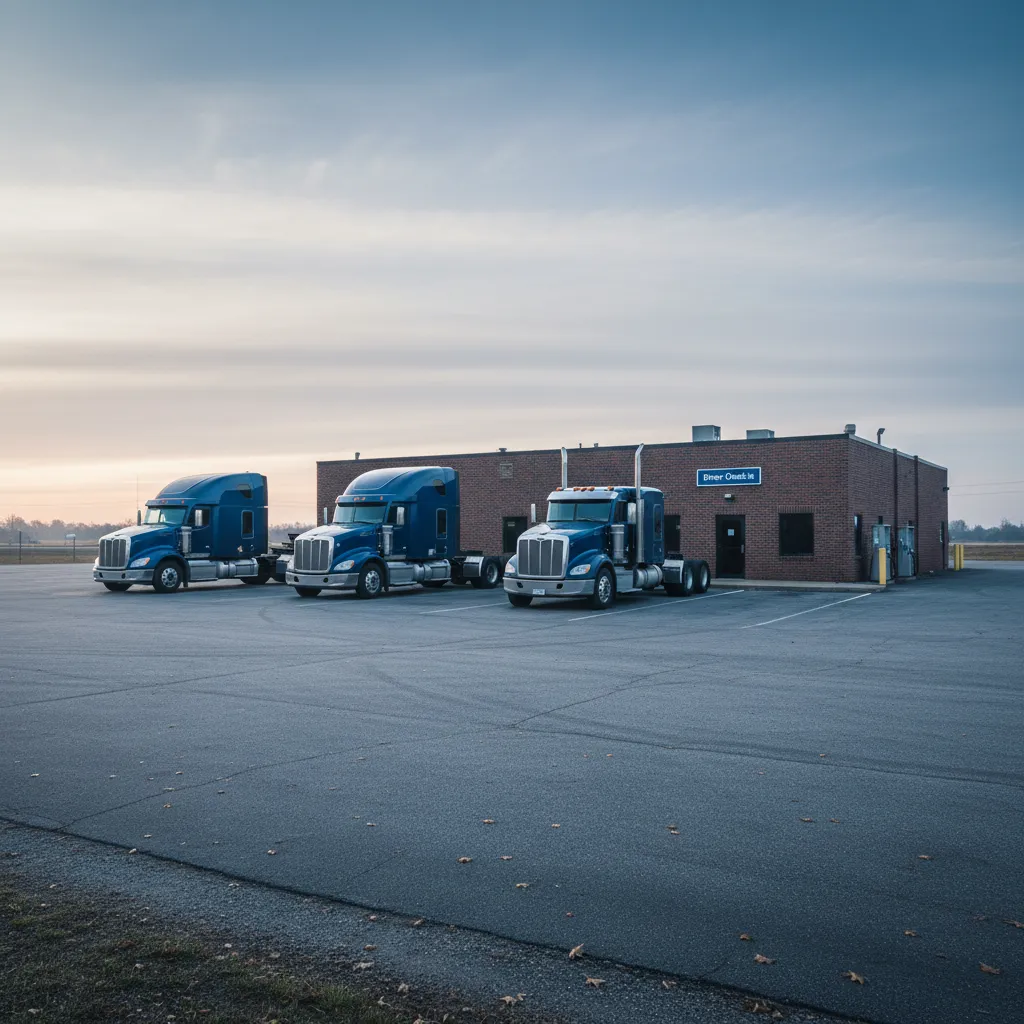
2026 Shift: Using Real-Time Stay Interviews to Cut Churn
Traditional exit interviews happen too late. Discover how leading carriers are using real-time stay interviews and automated feedback loops to stop driver churn before it happens.

The Post-Exit Interview Era in Trucking
For decades, the trucking industry has relied on the exit interview as its primary diagnostic tool for turnover. By the time a long-haul driver sits down to explain why they are leaving, the damage is already done. The carrier has lost a valuable asset, recruitment costs are already being incurred, and the truck is likely sitting idle. In 2026, the industry is pivoting toward a proactive model: real-time stay interviews.
Waiting until a resignation letter is on the desk is no longer a viable business strategy. With the cost of replacing a driver hovering between $8,000 and $15,000 when accounting for recruiting, onboarding, and lost productivity, the financial incentive to prevent churn is undeniable. This guide explores how automated, continuous feedback loops are replacing annual surveys to identify friction points and secure driver loyalty before the driver looks elsewhere.
TL;DR: Why Real-Time Feedback Matters
- Proactive vs. Reactive: Stay interviews identify issues while the driver is still employed.
- Automated Pulse Checks: Short, frequent surveys beat long, annual questionnaires.
- Data-Driven Retention: Real-time data allows for immediate intervention on pay, equipment, or dispatch issues.
- Cost Reduction: Cutting churn by even 10% can save mid-sized carriers hundreds of thousands annually.
The Failure of Traditional Retention Metrics
Historically, carriers have looked at turnover rates as a lagging indicator. If the rate spiked, management held a meeting to guess why. Was it the fuel prices? A competitor’s sign-on bonus? The lack of home time?
The problem with annual or semi-annual surveys is "recall bias." A driver who was frustrated by a broken APU in March may not remember that frustration in December—or worse, they may have already quit because of it. Furthermore, high-frequency drivers often view long surveys as a burden, leading to low participation rates and skewed data.
To combat this, elite carriers are moving toward predictive engagement. By monitoring sentiment through small, automated touchpoints, fleets can build a "thermometer" for their workforce, catching the fever before the driver walks away.
Defining the Real-Time Stay Interview
A stay interview is a structured conversation—or an automated digital interaction—aimed at understanding why an employee stays and what might cause them to leave. In the context of 2026 trucking, these are not hour-long HR meetings. They are micro-engagements delivered via mobile apps or SMS.
Key components of a modern stay interview:
- Frequency: Once a month or after specific milestones (e.g., first 90 days, 1-year anniversary).
- Brevity: 2-3 targeted questions that take less than 60 seconds to answer.
- Actionable Data: Questions focus on factors within the carrier's control, such as dispatch communication, equipment maintenance, and terminal facilities.
Automated Feedback Loops: The 2026 Standard
Automation is the engine behind effective retention. Manually calling 500 drivers to ask how they feel is impossible for a lean operations team. Automated systems, like those integrated by Fleegital, allow carriers to scale their empathy.
When a driver reports a "3 out of 10" satisfaction score regarding their last load, an automated workflow can immediately alert the driver manager. This allows for a "service recovery" moment. If the manager calls the driver within two hours to address the friction, the driver feels heard. If the issue persists for weeks without acknowledgment, the driver begins scrolling job boards.
Transitioning from "How are you doing?" to "What can we fix?"
Effective stay interviews avoid vague questions. Instead of asking "Are you happy?", modern tools ask:
- "Did your last dispatch accurately reflect your home-time expectations?"
- "On a scale of 1-5, how would you rate the responsiveness of the maintenance shop this week?"
- "What is one thing about your current route that makes your job harder than it needs to be?"
Leveraging Data to Predict Resignations
By aggregating real-time feedback, carriers can identify patterns that precede a resignation. This is the essence of predictive retention. For example, data might show that drivers who report dissatisfaction with their dispatcher three times in a 60-day period have an 80% likelihood of quitting within the next month.
Armed with this data, fleet executives can move from generalized retention programs to targeted interventions. Instead of a fleet-wide pay raise—which is expensive and often fails to address the root cause of churn—the carrier can retrain a specific group of dispatchers or upgrade the equipment at a specific terminal.
Bridging the Communication Gap with Technology
The physical distance inherent in long-haul trucking creates a natural disconnect between the driver and the home office. This isolation is a leading cause of turnover. Automated engagement tools bridge this gap by creating a consistent, reliable channel for two-way communication.
When carriers use Fleegital to streamline their digital presence and driver communications, they reduce the "black hole" effect where driver complaints go to die. Integrating feedback loops into the driver's daily workflow ensures that the carrier stays top-of-mind as a partner in the driver’s success, rather than just a source of a paycheck.
The ROI of Proactive Engagement
If a carrier with 200 drivers has a 90% turnover rate, they are replacing 180 drivers a year. At a conservative $10,000 per replacement, that is a $1.8 million annual cost.
Implementing a real-time stay interview program typically yields the following financial benefits:
- Reduced Recruiting Ad Spend: Fewer seats to fill means lower costs on job boards and social media advertising.
- Lower Onboarding Costs: Reducing the strain on safety and HR departments during orientation weeks.
- Increased Equipment Utilization: Trucks stay on the road instead of sitting in the yard awaiting a new driver.
- Safety Improvements: Experienced drivers who stay with a company longer have fewer accidents than new hires who are unfamiliar with company routes and equipment.
How to Implement Stay Interviews in 30 Days
- Identify the Touchpoints: Decide when you want to ping your drivers. The first 90 days are critical, as this is when the highest percentage of churn occurs.
- Select a Platform: Move away from paper surveys or manual calls. Use an automated system that integrates with your existing telematics or mobile app.
- Train Driver Managers: The feedback is useless if the managers don't know how to respond to it. Train them to view negative feedback as an opportunity for a "save" rather than a personal attack.
- Close the Loop: When you make a change based on driver feedback (e.g., upgrading lounge coffee or changing a dispatch policy), tell the drivers. Show them that their voice resulted in action.
Key Takeaways for Fleet Executives
- Exit interviews are autopsies; stay interviews are wellness checks. Stop diagnosing why drivers left and start discovering why they stay.
- Small data beats big data. Frequent, 1-minute surveys provide more actionable insights than 20-minute annual reviews.
- Automation is non-negotiable. To scale retention efforts across a regional or national fleet, carriers must use digital tools to manage feedback loops.
- Retention is a profit center. Reducing churn is the fastest way to improve a carrier’s bottom line in a tight-margin environment.
By pivoting to real-time stay interviews, carriers can move from a defensive posture to an offensive one, building a resilient fleet that is insulated from the constant churn of the open market.
Tagged