How AI-Route Optimization Will Minimize 2026 Fuel Costs
Discover how next-generation AI route optimization uses real-time fuel pricing and weather data to slash operational costs and maximize asset utilization for US fleets.
Navigating the High-Cost Landscape of 2026
For US trucking executives, the volatility of diesel prices remains the primary threat to bottom-line stability. As we approach 2026, the traditional methods of manual dispatch and static routing are no longer sufficient to maintain competitive margins. The industry is shifting toward AI-driven route optimization—a sophisticated integration of predictive analytics, real-time environmental data, and machine learning. This technology doesn't just find the shortest path; it identifies the most cost-effective path by accounting for variables such as rolling resistance, elevation changes, and hyper-local fuel price fluctuations. In a market where fuel accounts for roughly 30% of total operating costs, the ability to shave even 5% off consumption through smarter routing is a significant competitive advantage.
TL;DR: The Strategic Shift
- Dynamic vs. Static: AI replaces fixed routes with dynamic adjustments based on real-time traffic and weather.
- Predictive Refueling: Algorithms identify the cheapest fuel stops along a route in real-time.
- Asset Utilization: Maximizing ton-miles per gallon by reducing empty deadhead miles.
- Driver Integration: Linking fuel efficiency to driver scorecards for behavioral change.
The Evolution of Route Optimization: Beyond the GPS
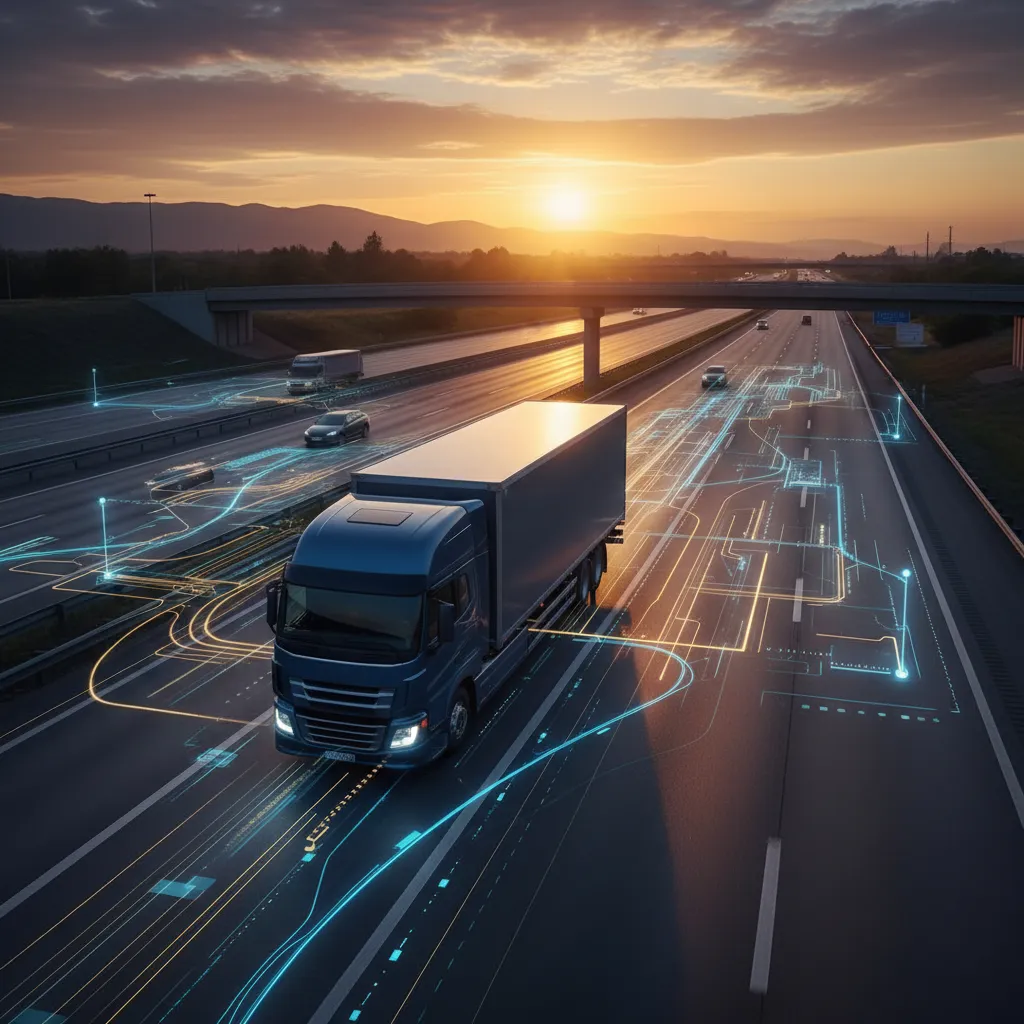
Traditional GPS systems calculate the quickest route based on distance and speed limits. However, AI-driven route optimization for 2026 operates on a multi-dimensional plane. Predictive algorithms now ingest millions of data points, including historical traffic patterns and future weather forecasts, to prevent trucks from idling in congestion or fighting high-velocity headwinds.
Integrating Real-Time Fuel Price Monitoring
Fuel prices vary significantly by state and even by exit. Next-generation dispatch tools are now integrated with real-time fuel price feeds. Instead of a driver fueling up at the most convenient stop, the AI calculates the exact volume of fuel needed to reach a high-volume, low-cost terminal further down the route. This "optimal fueling" strategy ensures that every gallon purchased is at the lowest possible price point within the operational window.
Weather Patterns and Aerodynamic Efficiency
Weather is more than a safety concern; it is a major factor in fuel consumption. A 20-mph headwind can decrease fuel efficiency by as much as 1 mile per gallon. AI tools now incorporate predictive weather modeling to suggest departure times or alternate routes that minimize wind resistance. By avoiding heavy precipitation or extreme temperature zones (which require higher cooling loads for reefers), fleets can maintain optimal engine performance and aerodynamic efficiency.
High-performing fleets are leveraging Fleegital to streamline their digital presence and driver recruitment marketing, ensuring they have the technical talent capable of operating these high-tech systems. When the technology is paired with skilled labor, the efficiency gains become exponential.
Maximizing Asset Utilization Through Predictive Dispatch
One of the most effective ways to minimize fuel costs is to eliminate "deadhead" miles. AI-driven dispatch platforms use predictive analytics to match available trucks with upcoming loads before the current journey is even completed.
Reducing Idle Time and Empty Miles
- Load Balancing: AI identifies backhaul opportunities in real-time, ensuring trucks are rarely moving empty.
- Wait Time Prediction: By analyzing historical data at shipper and receiver docks, AI avoids routing drivers to facilities known for high detention times, reducing unnecessary engine idling.
- Dynamic Re-routing: If a delivery window shifts, the AI automatically recalculates the route for the entire fleet to ensure no asset is underutilized.
Synchronizing Driver Scorecards with Fuel KPIs
Technology is only as effective as the person behind the wheel. In 2026, the most successful fleets are integrating AI routing data with driver scorecards. This creates a feedback loop where drivers are incentivized to follow the optimized route and maintain fuel-efficient driving habits (e.g., progressive shifting, cruise control usage, and reduced hard braking).
Behavioral Analytics
By capturing telematics data alongside route optimization metrics, fleet managers can identify which drivers are over-consuming fuel compared to the AI's predicted baseline. Training can then be targeted toward specific behaviors, such as excessive idling during rest periods or deviating from the optimal refueling plan. This data-driven approach turns fuel efficiency into a measurable KPI that directly impacts driver compensation and retention.
The Technical Infrastructure: Integrating APIS and Telematics
To achieve the level of optimization required for 2026, fleet managers must audit their current tech stack. The integration of Electronic Logging Devices (ELDs) with AI routing software allows for a seamless flow of data.
- API Connectivity: Ensure your dispatch software can "talk" to external weather, traffic, and fuel price APIs.
- Machine Learning Loops: The system should learn from every completed trip. If a suggested route consistently takes longer than expected, the AI must adjust its future predictions.
- Cloud-Based Collaboration: Real-time updates must be accessible to drivers, dispatchers, and maintenance teams simultaneously to ensure everyone is working from the same dataset.
Companies like Fleegital help trucking firms navigate this digital transformation by providing the strategic marketing and communication frameworks needed to attract tech-savvy drivers and partners.
Financial Impact: ROI of AI Implementation
While the upfront cost of advanced dispatch tools can be substantial, the ROI is usually realized within the first 12 to 18 months. Consider a fleet of 100 trucks. If AI optimization reduces fuel consumption by just 6% and eliminates 3% of deadhead miles, the annual savings can reach into the hundreds of thousands of dollars. Furthermore, the reduction in wear and tear on engines and tires—due to more consistent, less aggressive routing—extends the lifecycle of the assets.
Key Takeaways for 2026 Strategy
- Stop Passive Fueling: Use AI to mandate specific fueling stations based on real-time price arbitrage.
- Predictive Dispatch is Essential: Move away from reactive scheduling to a model that predicts load availability and traffic interference.
- Connect Human and Machine: Use driver scorecards to ensure the AI’s optimized routes are actually executed in the field.
- Invest in Integration: Ensure your ELD, TMS, and routing software are fully integrated to avoid data silos.
By embracing AI-driven route optimization now, US trucking companies can insulate themselves against the certain fuel price volatility of 2026. The shift from manual to algorithmic decision-making isn't just a trend—it's a requirement for survival in the modern freight economy.
Tagged